Cowslips, Fritillaries and other Guests
This post follows hard on the heels of yesterdays. First cowslips (Primula Veris) and what I have always called oxslips, a naturally ocurring hybrid between the cowslip and the primrose (Primula Vulgaris). There is also a "true oxlip" (Primula Elatior, which is to be found only in ancient woodlands in East Anglia. I bring it up today because yesterday, I was looking at oxlips and cowslips growing together in the wonderfully named 'First Tongue', a field on the Golden Cap Estate to the east of Charmouth. There will also be a great display of green winged orchids next month, just a few fields away. You will see from the photographs below that the naturally ooccuring hybrids are quite variable,
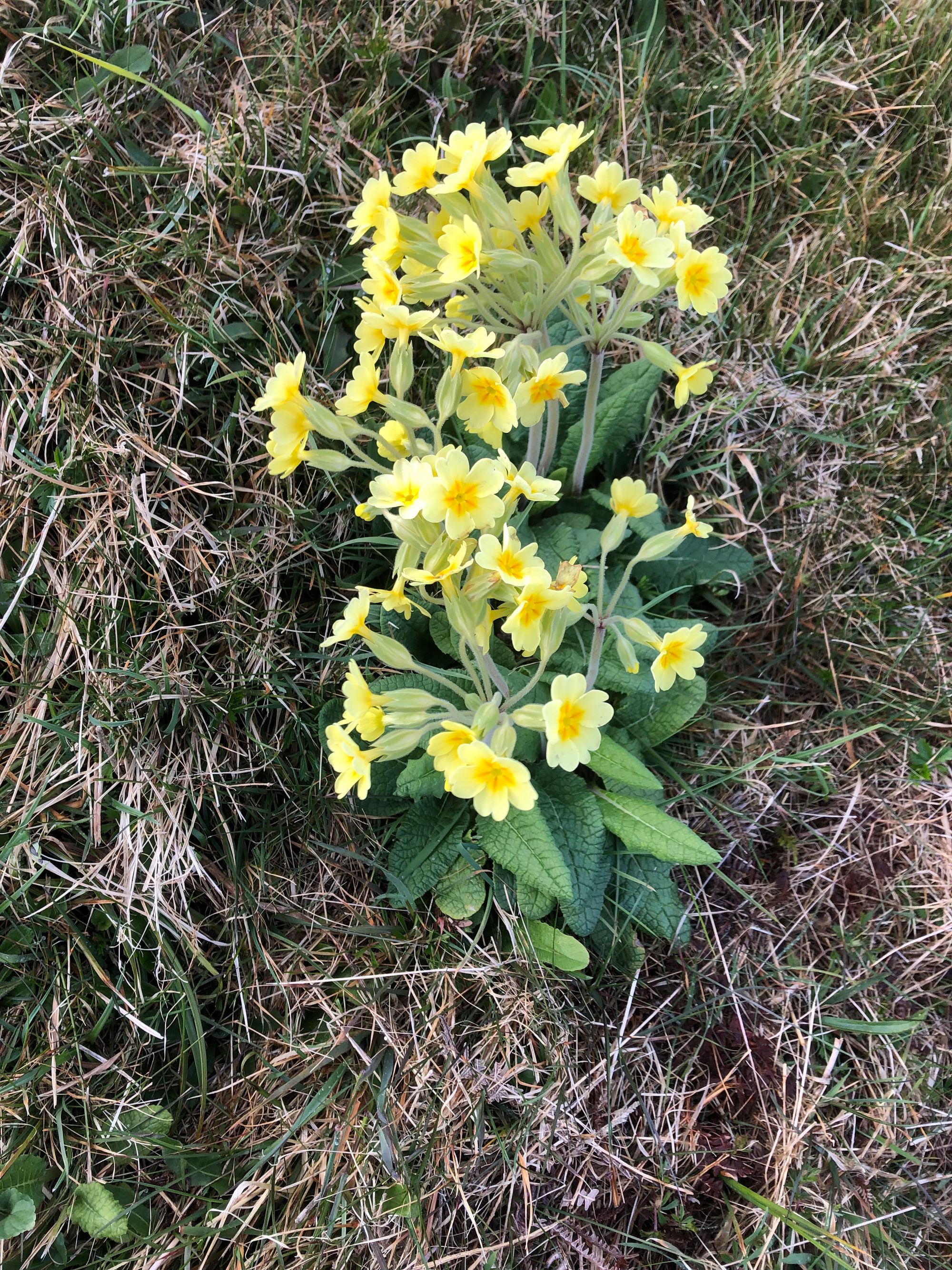
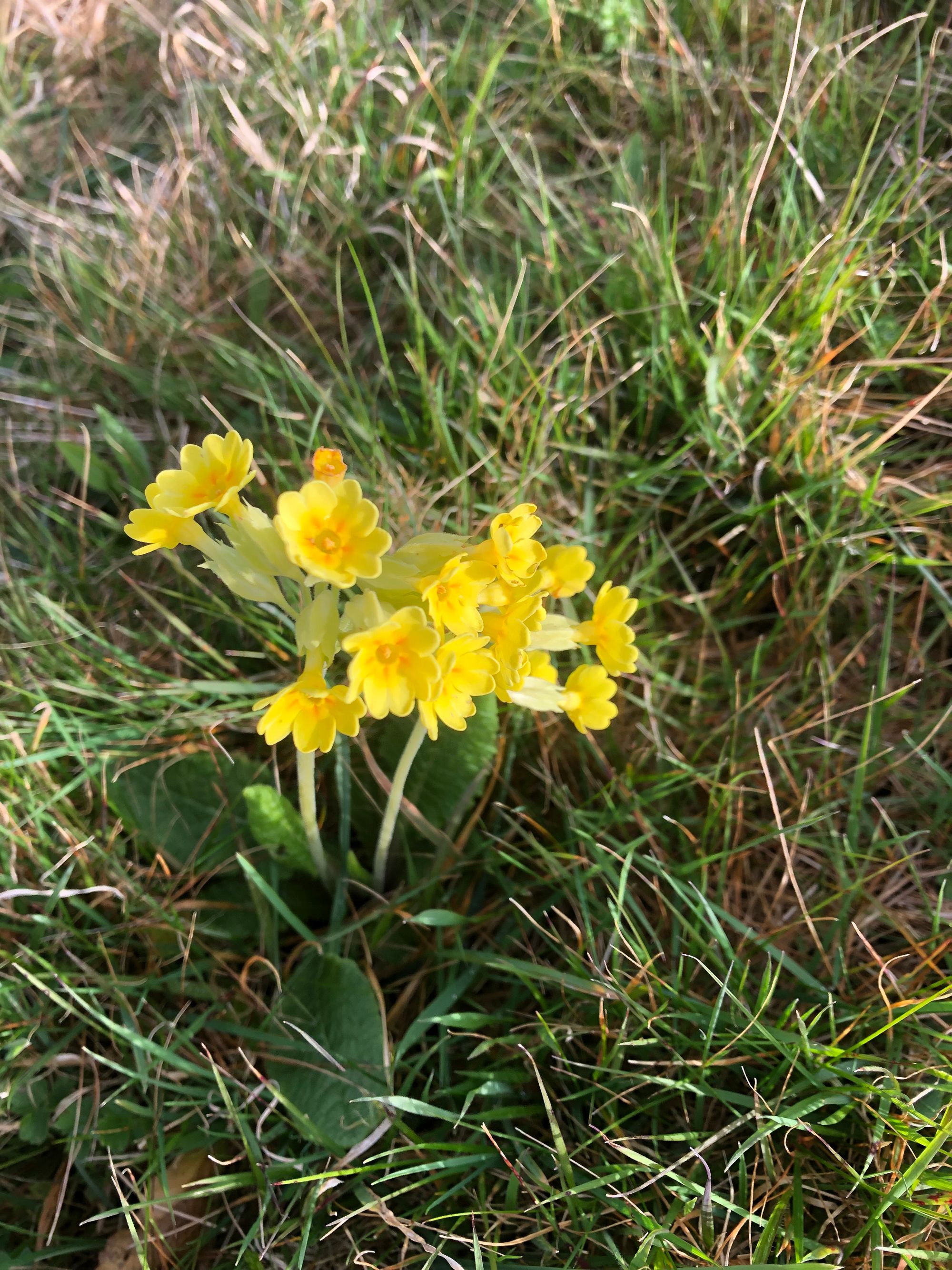
The next two photographs are of cowslips, the first bought several years ago in a pot in Bridport market and growing in my garden and very happy; the second is from First Tongue and we wonder if the market-bought plant is a selected variety. I will study the plants bought as plugs when/if they flower next year.
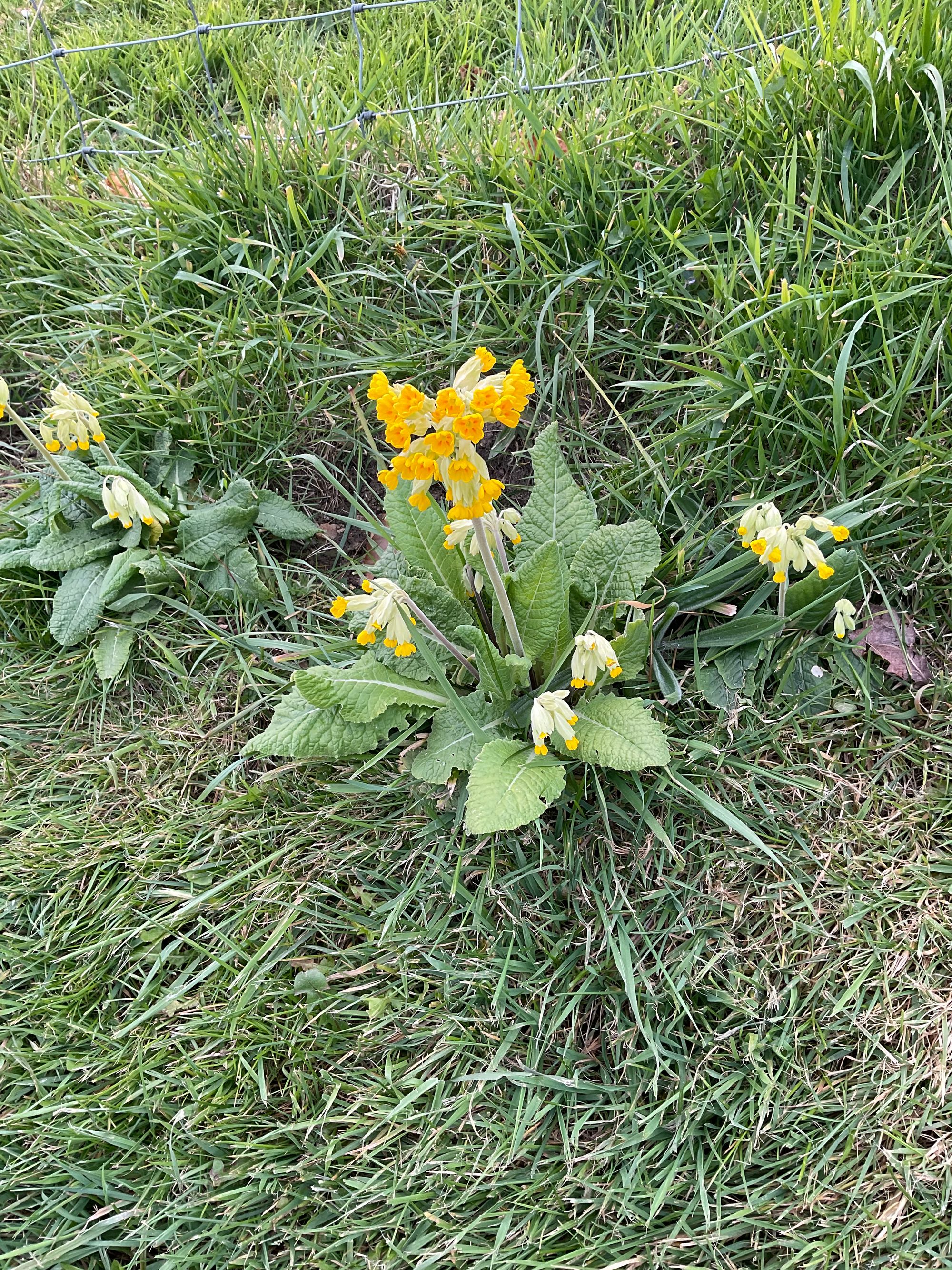
In our corner of West Dorset, where soils are quite variable, the cowslip is quite rare, and I have found it growing wild in only a few fields of old pasture. It is a welcome guest in our garden.
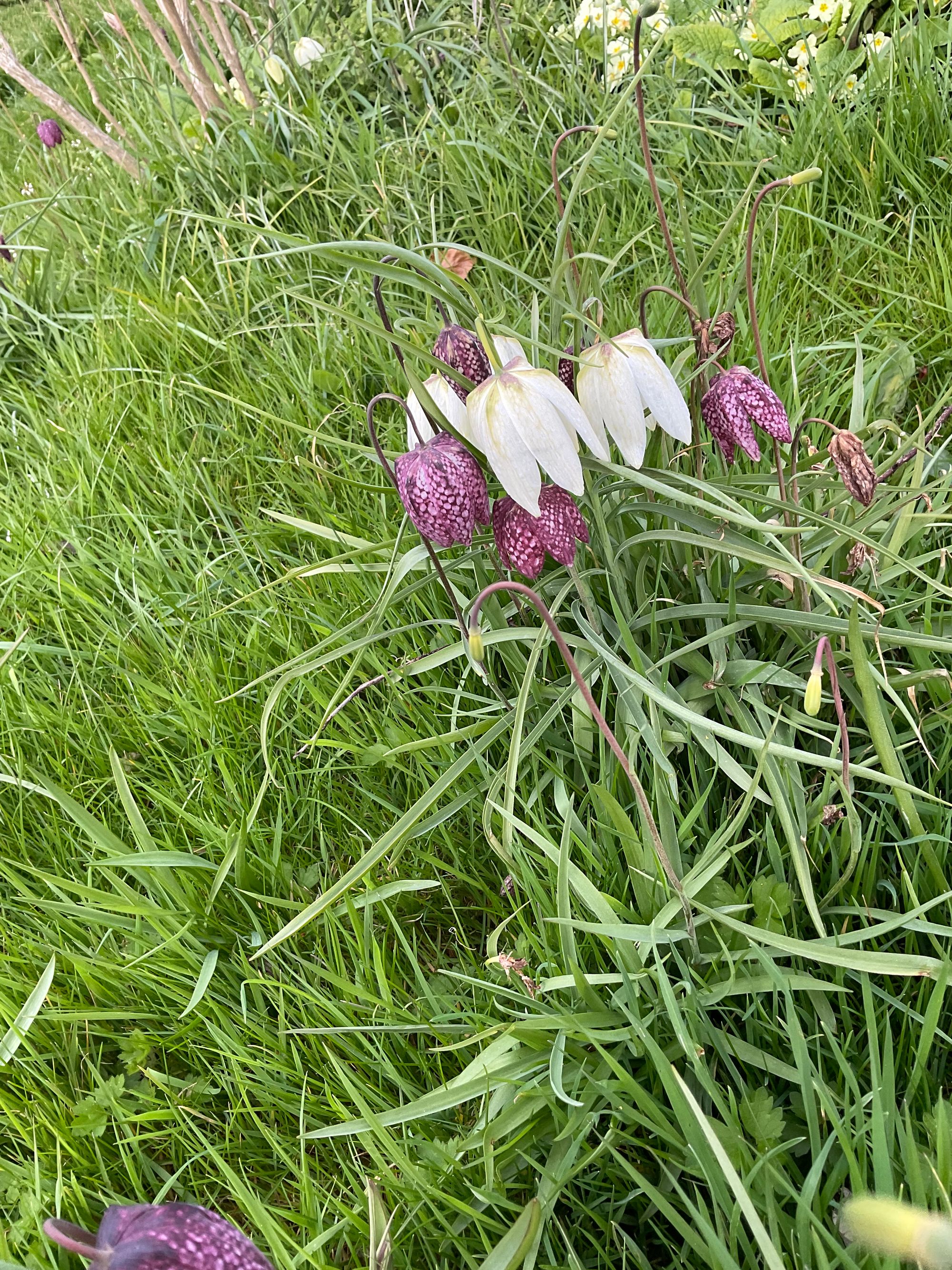
Next up, Fritillaries, which have done very well. They were brought to mind this week as I found an entirely new colony (which I must have planted and forgotten about) in the meadow we are trying to establish behind the farmhouse. If they like you (wet, water-retentive grassland seems ideal) they are the easiest plants in the world. Unlike daffodils and tulips, which signal their arrival like ships in the offing long before they actually flower, the fritillaries seem to pop up overnight ready to go from one day to the next. One good thing about writing this blog is that when I have a question, I turn to Google. Q1 Why are there plants and butterflies both called fritillaries? The plants got there first, taking their name from the Latin for a dice box, and you can imagine scaling up the flower of the snake's head (Fritillaria Meleagris), turning it upside down and shaking your dice in it. Improbably to me, this fritillary is a British native, flourishing in Thames Valley meadows. Fritillary butterflies (not the scientific name) got their name in the mid-nineteenth century at the height of the late Victorian enthusiasm for butterfly collecting.I imagine because they share the chequered colouring of the dark maroon flower. As you see from the picture below, we also have the white version, which flowers at least two weeks after its coloured siblings.
We have grown Melianthus Major for many years now, mainly for its striking glaucous, pinnate foliage, which it carries through the summer, rarely bothering with the flowers. You have to be careful where you put it, as it is a bit of a thug and will spread. In the photograph, it is growing outside my potting shed, leaves a bit yellowed by frost and age, but the flowers making a fine display. These are not buds, that's it. If I had to illustrate an alien landscape for a sci-fi story, I think I would turn to Melianthus Major for inspiration. Don't pay a lot for it, any sensible owner will be happy to give you a root. I cut it down to the ground some time in the spring, doesn't much matter when.
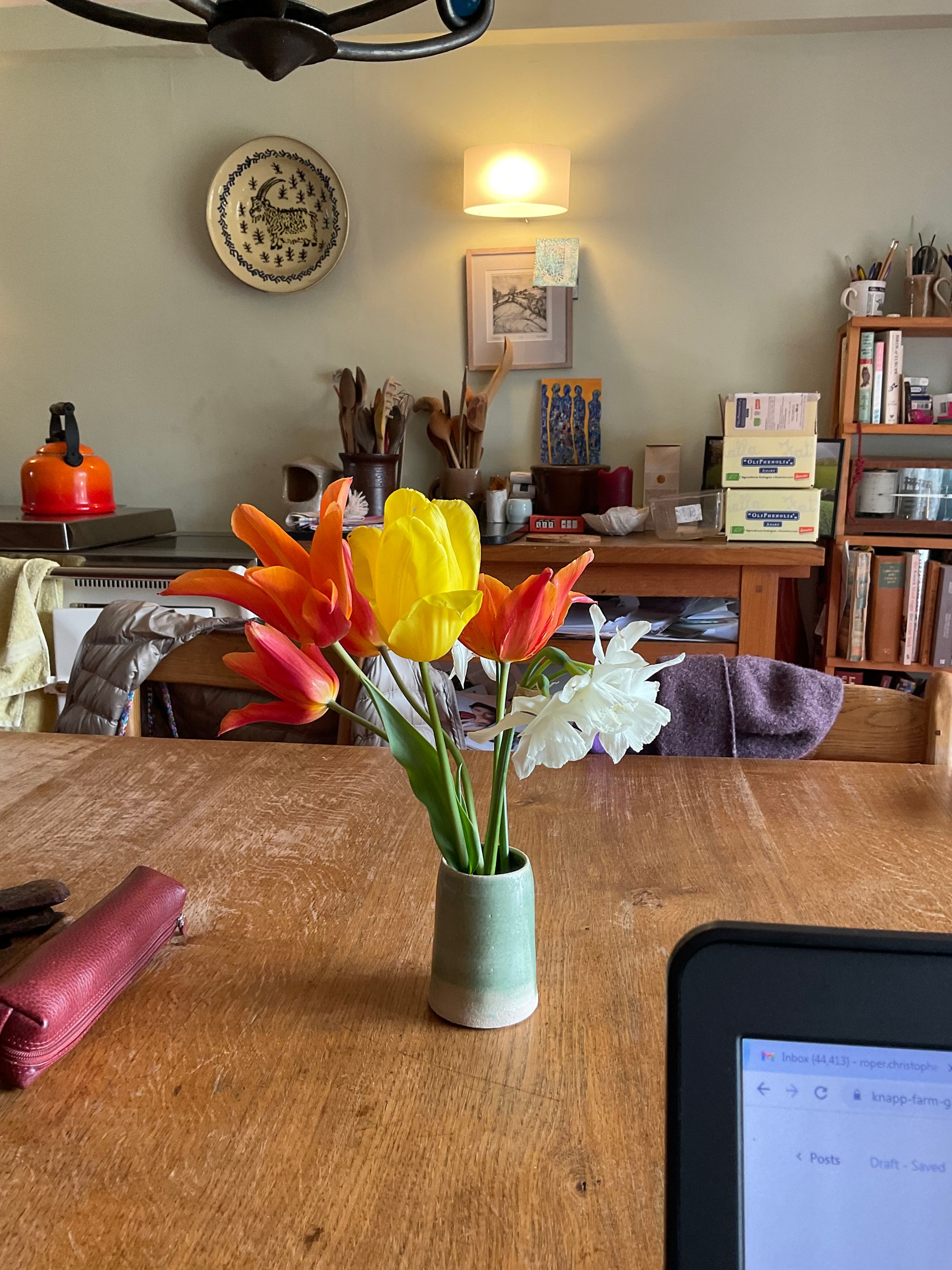
Finally, a word on tulips, we have never been keen on your standard municipal tulip, but there are many varieties that deserve a place in any garden. Some were blown over and we brought them into the house, where Ballerina is giving us great pleasure on the kitchen table, beside the multi-headed narcissus Thalia. We neither of us recognise the yellow tulip. More tulip reports will follow. I particularly like T.Clusiana, with candy-striped flowers.
That's all for today.
Christopher